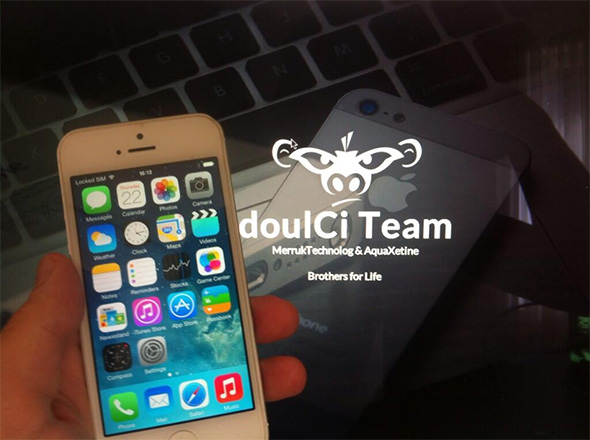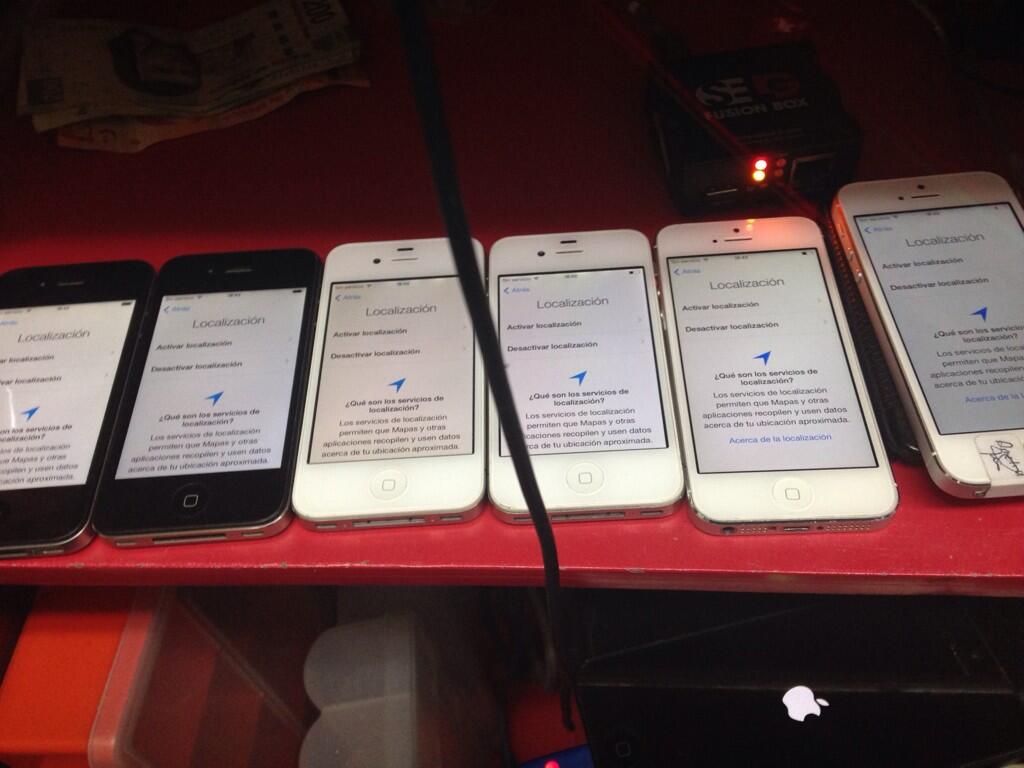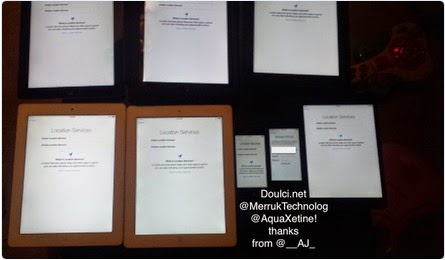

* doulCi Bypass Server source codes Cleaned, and soon in github.org, with the examples of codes you can build your own custom bypass server and know how-to activate iCloud with doulCi. Also! We are going to publish two new write up's about bypass hacks on this website.
* doulCi Activator ZIP files gotten from the web-searches is not a doulCi Team Software, we have not published any iCloud Bypass Software on the web. We just had doulCi Server with MAGIC LINE, and a video on youtube showing the software educative solution. Please Note that We are NOT RESPONSIBLE FOR ANY DAMAGES TO YOUR COMPUTERS IF YOU HAVE USED ONE OF THEM OR OTHER THINGS THEN DOULCI ICLOUD BYPASS SERVER WHEN IT WAS ONLINE.
The greatest trick of these scam artists is not that they copy @MerrukTechnolog (Maroc-OS) / @Merruk.
But it's when they make/tell everyone else think they are not!
- doulCi was built with love for people, to give them a second chance to get there iDevices working again (locally iCloud free, bypassed) for simple use, if you use iCloud we have made this project because we are thinking about you, and how we can be helpful for you and your family's safety. This amazing iCloud Hack tool called doulCi can bypass the iCloud Activation Lock and get your device working again, partially (we do not give you a bypass to forgot password for iCloud, login iCloud email, personal iCloud activation infos or how to use iCloud but we give you just a hack iCloud help with our free service to bypass it if you know how to activate iCloud with this tool), so you can get back your digital life, contacts, mail, notes, etc... Without giving you a full access to the cellular network, or a full functional device, because we are not sure that you are the real owner of this bypassed iDevice.
- doulCi bypass is built only for personal use, and conditionally for the original owners which have lost/got hacked or forgot there iCloud login informations. Please! Use it at your own risk.
Thanks for all the grateful people who we love. And because they believe in us and our free iCloud bypass service.
- doulCi.com still up only until today just for proof reasons, and to let people know about that this website is the only, was and still the official doulCi bypass website.
- Also, to let them know about the server with the magic line and all the was suspended in the last months of 2014, after Apple patched the two vulnerabilities used in that bypass.
- Because i want to make it clear for all my followers and people who comes from search engines, if we shut-down, others will be free and only on the web, they will lie to you without any reason, just because they want to stole your money or do something else bad.
- The word "doulCi" has been stolen by scammers and thief’s, and everyone now on the internet claims that he is part of what was so called "doulCi Team", they are all scammers, and i/we have never released a software or a programme to bypass Apple's iCloud called "doulCi Activator, doulCi Kitchen, doulCi Programme, doulCi Registrations, doulCi Server Licences, etc..." or anything else, the above words are all scam except for doulCi Kitchen that i have only published an article about it in my website "merruk.com". If you found a software or someone else claim he have it then it's a lie, again.
- just because am afraid from those scammers and thief's to use it (doulCi Kitchen) for other lies, ad-ware, spyware, malware, virus/trojan to build bot-nets and/or other scam proposes, and because scammers maked the name "doulCi" really bad and a reflection of scam, i decided to do not release it and only write an article about the basics of how it works on this article doulCi Kitchen, a.k.a. doulCi 2.0 just after the article that talks about leaving Apple's products and any other researches about it here, Maroc-OS's Goodbye Article Introduction..
- The new Developed method of this iCloud ByPass didn't released for public, but an article of PoC details was published in merruk.com as i said above, and PoC tests provided/proofed in twitter by @MerrukTechnolog, in the middle of 2015.
- After publishing the detailed techniques by about 6 or 7 months later only one other person has got a way to do it, because we had some shared infos from both parts, this method is only works for iOS 7.1.1 and lower, otherwise everything published on the internet now are just scam/viruses or thief in about 90% of cases, the last 10% cases uses illegal ways to do this which I never agree or accept to be one of them, and there prices are very heigh.
- Maybe after some time, when ll be sure there are no people who will use me and my research to do illegal things or get money from free knowledges/services that is shared for free, then I can open-source this doulCi Kitchen method.
knightofkanto"Thanks from Las Vegas iPod touch 5th gen (3 including the one I'm using )"
Mr. Oak"I already told you that you're THE BEST, AMAZING, MASTER. I really thanks you"
iCloud Bypass : doulCi is the world's first alternative iCloud server, and the world's first iCloud Activation Bypass. doulCi will bypass and activate your iDevice for you when you are stuck at the activation menu.
So, why would you use it? For example, if you have forgot your iCloud email Apple ID or password, or you are no longer have access to your old iTunes email account, then its impossible to regain control of your Apple Product! no iCloud mail account will be given to you. doulCi iCloud bypass server is the only solution on the web that will enable you to regain the permanent access of your Apple iDevice and give it back to you without using the original icloud account email and password, but there is some limitation, you have no control of cellular data and no cellular network.
More Information and iCloud help will follow soon if you forgot iCloud! so stay tuned on merruk.com or doulci.com
We Had Support for All Apple iDevices!
GSM iPad's and iPhone 4S, iPhone 5 (C) (C), Still In Beta Testing, and needs a SIM Card with pin active on it to bypass the activation loop state. Please follow doulCi Team members on twitter or the Official doulCi websites for daily updates.

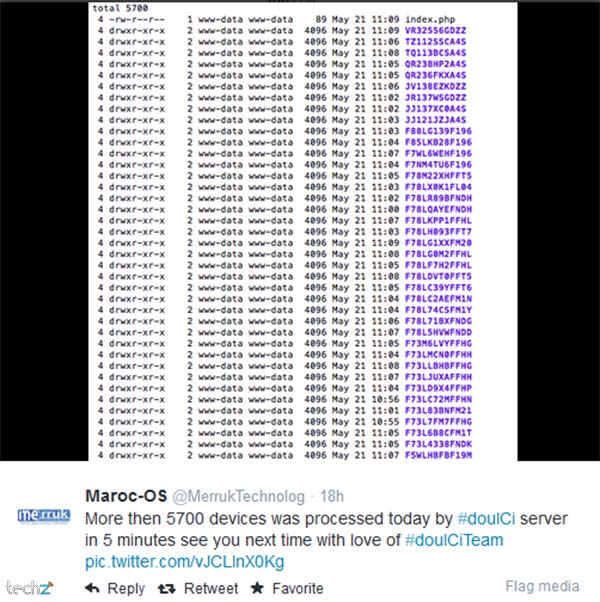
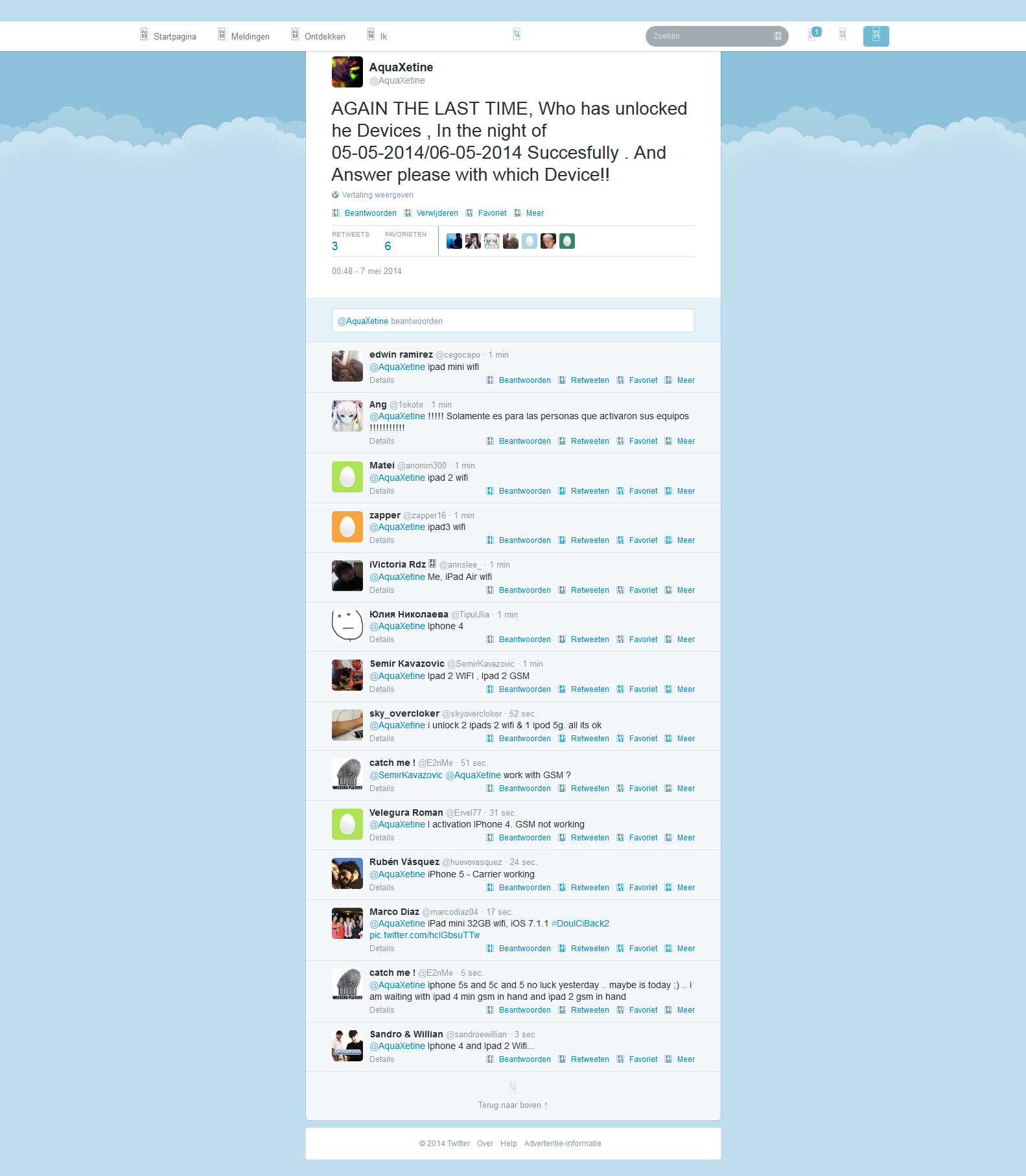
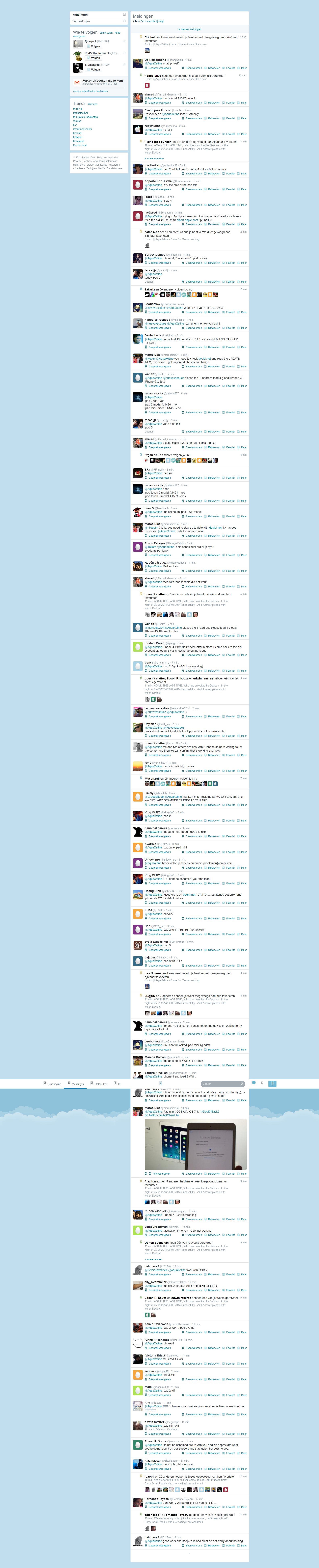
This is the first conversation that proof what gadgetwide using as server is the real and only working platform (doulCi).

The "auto like" feature for Facebook is not an official Facebook tool; rather, it typically refers to third-party automation services designed to artificially boost engagement on posts
. While some limited "automatic" behavior exists within Facebook's own ecosystem—such as share counts being added to a link's total "like" tally when shared in private messages—the term most often refers to external bots or browser extensions. How Auto Like Services Work
These services generally operate through one of several technical methods: Access Token Submission
: Users provide a Facebook "access token" to a third-party app, granting it permission to perform actions (like "liking" other users' content) on their behalf. Engagement Pools
: Many tools function as a "pool" where users agree to automatically like each other's posts. Once you sign up, your account likes others' content, and they reciprocate automatically. Browser Extensions : Tools like PhantomBuster
use browser cookies to act on your behalf while you remain logged in, mimicking manual clicks. Automated Bots : Specialized software like
uses randomized timing, proxy rotation, and digital fingerprinting to simulate genuine human behavior and avoid detection. Core Functionalities Targeted URL Liking
: Users can input specific URLs for profiles or posts they want to receive a set number of likes. Scheduled Activity
: Automated likes can be delivered 24/7 or during specific off-peak hours to simulate natural growth. Cross-Engagement
: Some tools allow you to auto-like comments, photos, and replies to increase the perceived depth of interaction on a page. Critical Risks and Ethical Considerations
Using auto-liking services carries significant risks as they violate Facebook's Terms of Service Facebook Auto Liker tutorial - PhantomBuster
An "auto like" on Facebook refers to using third-party software to automatically generate likes for your posts or to automatically like others' content
. While these tools promise quick engagement, they carry severe risks to your account's security and reputation. How Auto Likers Work
Most auto-liker services operate as a "like-for-like" social exchange system. Token Access
: You log in to a third-party website using your Facebook credentials or a "token". Shared Control
: By providing this token, you grant the service permission to use your account. Automated Exchange
: The service uses your account to like other users' posts, and in return, those users' accounts (controlled by the service) like yours. Major Risks & Consequences
Facebook does not have an official auto-like feature and actively penalizes accounts that use them.
Automated Liking of Facebook Posts: A Report
Introduction
The purpose of this report is to provide an overview of the concept of auto-liking Facebook posts, its implications, and potential consequences. Auto-liking refers to the use of software or tools to automatically like posts on Facebook without the user's explicit consent.
Background
In recent years, the use of social media automation tools has become increasingly popular. These tools allow users to schedule posts, automate likes, and engage with others on social media platforms, including Facebook. While these tools can save time and increase efficiency, they also raise concerns about authenticity, spam, and user experience.
Methods
To produce this report, we researched existing literature and online resources on the topic of auto-liking Facebook posts. We also analyzed various tools and software that offer auto-liking features.
Findings
Our research revealed that:
Conclusion
While auto-liking Facebook posts may seem like a convenient way to engage with content, it can have negative consequences, including account suspension or termination. Moreover, it can also undermine the authenticity and value of likes and engagement on the platform. As social media continues to play a significant role in our online lives, it is essential to prioritize authenticity and genuine engagement.
Recommendations
Based on our findings, we recommend:
Limitations
This report is limited by its reliance on existing literature and online resources. Further research would be needed to gather more comprehensive data on the use and impact of auto-liking tools on Facebook.
Future Research Directions
Future research could explore:
The Ultimate Guide to Auto Liking on Facebook Posts
In today's digital age, social media has become an integral part of our lives. Among the numerous social media platforms, Facebook remains one of the most popular and widely used platforms, with over 2.7 billion monthly active users. For individuals, businesses, and organizations, Facebook provides an excellent opportunity to connect with their audience, share their content, and build their brand.
However, with the ever-increasing competition on Facebook, it has become challenging to get your content noticed by your target audience. One way to boost engagement and make your content more visible is by using the "auto like on Facebook post" feature. In this article, we will explore the concept of auto liking on Facebook posts, its benefits, and how to use it effectively.
What is Auto Like on Facebook Post?
Auto like on Facebook post refers to the feature that allows you to automatically like posts from specific users, pages, or groups. This feature can be particularly useful for individuals and businesses who want to engage with their audience, show appreciation for their content, or simply keep track of posts from specific sources.
Benefits of Auto Liking on Facebook Posts
There are several benefits to using the auto like feature on Facebook posts:
How to Auto Like on Facebook Posts
There are a few ways to auto like on Facebook posts:
Method 1: Using Facebook's Built-in Feature
Facebook has a built-in feature that allows you to automatically like posts from specific users or pages. To use this feature:
Method 2: Using Third-Party Extensions or Apps
There are several third-party extensions and apps available that can help you auto like on Facebook posts. Some popular options include:
Method 3: Using Facebook Groups
If you're part of a Facebook group, you can also auto like posts from group members. To do this:
Best Practices for Auto Liking on Facebook Posts
While auto liking on Facebook posts can be beneficial, it's essential to use this feature responsibly and follow best practices:
Common Issues and Troubleshooting
If you're experiencing issues with auto liking on Facebook posts, here are some common problems and solutions:
Conclusion
Auto liking on Facebook posts can be a valuable feature for individuals and businesses looking to engage with their audience and build their brand. By understanding the benefits and best practices of auto liking, you can effectively use this feature to boost engagement, save time, and improve your visibility on Facebook.
FAQs
Q: Can I auto like posts from specific users or pages? A: Yes, you can auto like posts from specific users or pages using Facebook's built-in feature or third-party extensions and apps.
Q: Is auto liking on Facebook posts spammy? A: Auto liking on Facebook posts can appear spammy if done excessively or inauthentically. Use this feature responsibly and follow best practices.
Q: Can I auto like posts from Facebook groups? A: Yes, you can auto like posts from Facebook group members by adjusting the group settings.
Q: How do I troubleshoot issues with auto liking on Facebook posts? A: Check your notification settings, verify that you've correctly set up the auto like feature, and be cautious of spam or fake accounts.
By following the guidelines and best practices outlined in this article, you can effectively use the auto like feature on Facebook posts to enhance your social media presence and engagement.
Informative Report: Automated Engagement on Facebook Executive Summary
Automated liking tools (often called "auto-likers") are software or services designed to artificially inflate the engagement metrics of Facebook posts. While they promise rapid social proof and increased reach, they operate in direct violation of Meta’s Terms of Service and significantly compromise account security. How Auto-Liking Works
Most auto-liking systems rely on one of two primary mechanisms:
Token-Based Exchange: When you log into an auto-liker website with your Facebook credentials, it generates an "access token." The service then uses your account to like other users' content while simultaneously providing you with likes from their accounts in a "like-for-like" cycle.
Bot Networks: Specialized tools use "farmed" or fake accounts controlled by software to like specific posts. Sophisticated versions use proxy rotation and randomized behavior to mimic human activity and evade detection. Critical Risks & Consequences
Using these tools introduces severe technical and reputational hazards:
The dream of instant popularity on social media often leads users to search for "auto like on facebook post" tools. While these services promise a quick boost in numbers, they often come with severe risks to your account's safety and your brand's long-term reputation.
Below is a comprehensive guide on how these tools work, why they are dangerous, and how you can achieve genuine engagement that actually grows your presence. What is a Facebook Auto Liker?
An "auto liker" is a third-party application or website designed to automatically generate likes, reactions, and sometimes comments on your Facebook posts. These services typically fall into two categories:
Token-Based Exchange: You provide your Facebook "access token" to the service. In exchange for receiving likes, your account is used to automatically like other people’s posts.
Bot Panels: Paid services that use a network of fake or "zombie" accounts to flood a specific post with likes in seconds. The Hidden Risks of Using Auto Likers
While seeing hundreds of likes appear instantly might feel rewarding, the consequences are often immediate and damaging: 1. Account Compromise and Hacking
To use most free auto likers, you must submit an access token, which acts like a digital key to your account. This gives the app permission to post on your behalf, view your private data, and even change your password. Many users report their accounts being used to spread spam, malware, or inappropriate content after using these tools. 2. Violating Facebook's Terms of Service
Facebook's Terms of Service strictly prohibit the use of automation to artificially inflate engagement. Their systems are designed to detect "coordinated inauthentic activity". If caught, you face:
Shadowbanning: Your posts are hidden from your followers' feeds, even though you can still post.
Temporary Restrictions: You may be blocked from liking, commenting, or posting for several days or weeks.
Permanent Suspension: Repeated violations often lead to a permanent ban of your profile or business page. 3. Algorithmic Penalty auto like on facebook post
Facebook's algorithm prioritizes content that generates meaningful interaction. If a post has 500 likes but zero comments or shares, the algorithm recognizes this as fake. Instead of boosting your reach, the system may flag your page as low-quality, permanently reducing the organic visibility of your future posts.
A Better Way: How to Get "Auto-Like" Levels of Engagement Organically
Rather than risking your account with bots, you can use these proven strategies to naturally increase your likes and reach: Optimize Your Posting Strategy Meta Terms of Service - Facebook
The short answer is no — but there is one gray area.
Facebook does allow automatic sharing and commenting through its official Graph API for business purposes. For example, you can schedule posts, auto-publish from RSS feeds, and auto-reply to comments. However, the API does not include an endpoint for automatically liking posts. Attempting to like via the API at high speed will be rejected.
The only legitimate automation: Facebook’s own "Reactions" are manual. Some third-party social media management tools (like Buffer or Hootsuite) allow you to schedule posts, but they cannot auto-like existing posts.
Savvy users can spot fake engagement instantly. When a post has 500 likes but zero comments and a generic audience, it screams “fake.” In B2B or professional contexts, this is career-limiting.
Auto‑liking offers quick appearances of popularity but is fraught with technical, reputational, legal, and platform risks that generally outweigh short‑term gains. Sustainable growth comes from compliant, transparent strategies emphasizing content quality, legitimate promotions, and robust measurement.
If you want, I can:
Automatic Likes on Facebook: Convenience, Consequences, and Considerations
Social media platforms like Facebook have reshaped how people communicate, build identity, and seek validation. One frictionless feature that has emerged is the “like” — a quick, low-effort reaction that signals approval or acknowledgement. Recently, some users and third-party tools enable automatic “likes” on Facebook posts, creating convenience but also raising ethical, social, and practical concerns.
What automatic likes are Automatic likes are reactions applied to posts without a user’s deliberate, moment-by-moment choice. They can come from browser extensions, automation scripts, third-party services, or settings that automatically acknowledge content from specific accounts. The intent is often to save time, maintain social presence, or ensure consistent engagement.
Benefits
Drawbacks and risks
Ethical and social considerations
Best practices
Conclusion Automatic likes on Facebook offer efficiency and can help maintain an active social presence, but they also risk undermining authenticity, miscommunicating intent, and exposing users to privacy or policy problems. Thoughtful, limited use combined with human review and respect for context preserves the benefits of convenience while mitigating harm. Ultimately, maintaining intentionality in online interactions fosters trust and more meaningful digital relationships.
Related search suggestions: (If you want, I can provide related search terms to explore tools, privacy concerns, or Facebook’s policies.)
An "auto like" on Facebook refers to the use of automated software or services to generate likes on a post without manual effort. While often used to boost social proof, these tools carry significant risks to your account's security and visibility. 🛡️ How Auto Likers Work
Most auto-liker tools function through a "like-for-like" network or by using compromised accounts.
Access Tokens: To use these services, you often must provide a Facebook access token. This is a digital key that gives the app permission to act on your behalf.
Mutual Exchange: Once you join, the service uses your account to "like" other users' posts, while their accounts are used to like yours.
Automation Scripts: Some tools use browser extensions or scripts to simulate human clicks, often rotating IP addresses to avoid detection. ⚠️ Critical Risks and Dangers
Using these services is a direct violation of Facebook's Community Standards regarding artificial engagement.
Account Suspension: Facebook's AI systems are highly effective at detecting non-human behavior patterns, which can lead to temporary or permanent bans.
Security Breaches: Providing an access token is essentially handing over your password. Attackers can use it to read private messages, steal personal data, or seize control of your pages. The "auto like" feature for Facebook is not
Reputation Damage: Your account may automatically "like" or share inappropriate content, spam, or malware, which is visible to your friends and family.
Algorithm Penalties: As of 2026, Facebook's algorithm prioritizes authentic engagement. Using bots can "shadowban" your content, making it invisible to real users. 💡 Safer Alternatives for Engagement

© 2014-2016 Merruk Technology, SARL. Designed by Merruk.com. All rights reserved.