|
CAD for leather goods and small leather goods |  |
 |
 |
|
CAD for leather goods and small leather goods | |
|
|
| Mozart | Liszt | Virtual-Design | Support | Contacts |
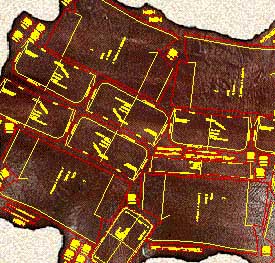
| Mozart is a CAD realized following the requests and
suggestions of leather goods pattern-makers to simplify and expand their work being
them free to design according to their ideas. Mozart requires AutoCAD® or ZWCAD®. The license of Mozart does not include the license of AutoCAD® or ZWCAD® Mozart 8 is available for AutoCAD® up to version 2026 and for ZWCAD® up to version 2025. |
|
Quick learning Built on pattern-makers' requirements Mozart shares his working method giving full liberty to design the model. The pattern-maker can concentrate himself on the model to be realized. He does not have to code the materials or pieces before or during the drawing. Freely customizable The user can easily change many settings of Mozart: colors, the method of calculating the bill of materials and the bill of working times and many other parameters. Mozart can also load and use custom toolbars, scripts and commands written by the user. |
|
|
Flexibility The user is free to choose the names of the patterns and their hierarchy. Each pattern is a single file and Brands, Lines, Seasons etc. can be organized by folders. Each pattern is independent from the others and can be copied or moved in whole or in part from one folder to another like any other file. The bill of materials and the bill of working times can be performed in different ways and the reports are produced as ASCII text or Excel document. |
|
Data exchange The patterns can be read using many others CAD programs. The cutting can be done using a wide range of machines from vertical or flatbed plotters to knife, laser or water-jet cutting machines. The bill of materials, the bill of accessories and the bill of working times can be exported to others data management systems. Development The open structure of Mozart means it can be constantly improved according to users suggestions and requests. The upgrade of Mozart does not oblige the user to upgrade the other components of the CAD system. Plug-ins increase the power and the flexibility of Mozart. |
|
| Plug-ins add specific functions to Mozart. The user himself can write his own plug-ins, Mozart will automatically load them. Plug-ins allow to customize Mozart's installations to the needs of the user and reduce the cost because they avoid the purchase of what is not needed. Users can request the development of personal plug-ins to create special reports or drawing functions. On request personal plug-ins are not available to other users in order to protect their confidentiality. |
The 1997 film "Lolita" is a drama directed by Adrian Lyne, based on the novel of the same name by Vladimir Nabokov. The movie stars Jeremy Irons, Dominique Swain, and Melanie Griffith.
The story revolves around Humbert Humbert (played by Jeremy Irons), a middle-aged literature professor who becomes infatuated with a 12-year-old girl named Dolores Haze (played by Dominique Swain), whom he refers to as Lolita. Humbert's obsession with Lolita leads him to rent a room in her mother's house, where he becomes a frequent visitor to the family.
As the story unfolds, Humbert's intentions are slowly revealed, and his relationship with Lolita becomes increasingly complicated. The film explores themes of obsession, desire, and the blurring of moral boundaries.
The film received mixed reviews from critics, with some praising the performances of the cast and others criticizing the film's handling of the sensitive topic of pedophilia. Despite the controversy, the film was a commercial success and sparked a renewed debate about the novel and its themes.
It's worth noting that the film's release was preceded by a long and complex history of censorship and controversy surrounding the novel. The book, which was first published in 1955, was banned in several countries due to its perceived obscenity and themes of pedophilia.
In terms of its cultural significance, "Lolita" (1997) remains a thought-provoking and challenging film that raises important questions about the nature of desire, morality, and the human condition. While it may not be a comfortable or easy film to watch, it is a significant work that continues to spark important discussions and debates.
In his 1997 adaptation of Vladimir Nabokov’s , director Adrian Lyne attempts to peel back the layers of high-literary artifice to reveal the raw, human tragedy beneath. While the 1962 Kubrick version leaned into black comedy and social satire to bypass the era's censorship, Lyne’s film is a somber, atmospheric road movie that focuses on the psychological deterioration of its two central figures. By emphasizing the visceral reality of their "relationship" over the linguistic gymnastics of the novel, the 1997 film forces the audience to confront the predatory nature of Humbert Humbert without the protective shield of his poetic prose. The Illusion of Romance vs. The Reality of Abuse
The film’s greatest challenge lies in depicting a story narrated by a monster who believes himself a romantic. Lyne utilizes Jeremy Irons’ haunting performance to capture this duality. Irons portrays Humbert not as a cartoonish villain, but as a man consumed by a "spiritual" obsession that he confuses with love.
However, the film subtly undercuts Humbert’s self-delusion through its visual language. While Humbert’s voiceover may wax lyrical about "the light of my life," the camera often captures the stark reality of Dolores "Lolita" Haze’s situation:
The Loss of Childhood: Dominique Swain’s performance highlights Lolita’s immaturity, showing her as a child who is bored, rebellious, and ultimately trapped.
The Power Imbalance: The film emphasizes how Lolita is forced into a patriarchal economy, choosing exploitation over homelessness or the loss of the only "family" she has left.
Emotional Decay: Unlike the novel’s often detached tone, the film tracks the visible weight of the abuse on Lolita, showing her gradual slide into a weary, "basic" adulthood that reflects her stolen potential. Cinematic Fidelity and Atmospheric Tone lolita.1997
Lyne is often credited with a more "faithful" adaptation of the plot compared to Kubrick. He restores key sequences, such as the full arc of the cross-country road trip and the more explicit presence of Clare Quilty, played with menacing eccentricity by Frank Langella.
The film's technical elements work in tandem to create a sense of inevitable doom:
Cinematography: The soft lighting and lush, dreamlike imagery of post-war Americana contrast sharply with the dark subject matter, mirroring Humbert’s own attempts to aestheticize his crimes.
Score: Ennio Morricone’s melancholic music strips away any sense of "fun," replacing it with a profound sadness that underscores the tragedy of both characters. Conclusion: A Critique of Delusion
Ultimately, Lolita (1997) serves as a critique of the "unreliable narrator." By bringing Nabokov’s words to life, the film demonstrates that even the most beautiful language cannot mask the horror of child exploitation. It is not a love story, but a study of a man who destroyed a child’s life to satisfy a ghost from his own past. By the time Humbert finds a pregnant, older Dolores at the film's end, the "nymphet" of his imagination is gone, leaving only the wreckage of the human being he failed to see. If you are writing this for a specific class or project, Analyze the performance of Jeremy Irons in more detail?
Discuss the controversy surrounding its release and censorship?
Lolita (1997) is a drama film directed by Adrian Lyne and is the second major screen adaptation of Vladimir Nabokov’s 1955 novel. The film stars Jeremy Irons as Humbert Humbert, a British professor who becomes obsessed with his 14-year-old stepdaughter, Dolores "Lolita" Haze, played by Dominique Swain. Plot Overview
The Obsession: Humbert Humbert seeks a place to live while teaching in the U.S. and meets Charlotte Haze (Melanie Griffith). He is immediately captivated by her young daughter, Lolita, whom he views as the reincarnation of a lost childhood love.
The Marriage: Humbert marries Charlotte solely to remain near Lolita. After Charlotte discovers his true feelings and is killed in a car accident, Humbert takes Lolita on a cross-country trip, hiding her mother’s death and initiating an abusive sexual relationship.
The Rivalry: Their journey is plagued by Humbert’s jealousy and the presence of a mysterious figure, Clare Quilty (Frank Langella), who eventually lures Lolita away. Content and Rating
The film is Rated R for its depiction of aberrant sexuality, nudity, and violence. The 1997 film "Lolita" is a drama directed
Sexual Content: Includes a destructive pedophilic relationship and explicit scenes. Adult body doubles were used for most sex scenes as Dominique Swain was 15 during filming.
Violence & Gore: Notable for a strong scene of violence at the end of the movie.
Themes: Explores themes of manipulation, power, moral transgression, and the tragic consequences of obsession. Critical Reception and Controversy
Adrian Lyne’s 1997 adaptation of is often regarded as a more faithful, albeit far more uncomfortable, interpretation of Vladimir Nabokov’s controversial 1955 novel than the censored 1962 Kubrick version. It is a lushly filmed tragedy that navigates the narrow, treacherous line between a "romantic" aesthetic and the horrific reality of its subject matter. Performances: The Film’s Greatest Strength
The weight of the film rests on its two leads, both of whom deliver career-defining performances: Jeremy Irons
as Humbert Humbert: Irons captures the "unreliable narrator" perfectly, balancing an intellectual, European charm with a deeply disturbing, predatory obsession. He portrays Humbert not as a hero, but as a man consumed by a delusion that ultimately leads to his own disintegration. Dominique Swain
as Dolores "Lolita" Haze: In a breakout role, Swain avoids the trope of a simple "temptress." Instead, she portrays a rebellious, immature, and ultimately vulnerable child who is caught in a web of manipulation she cannot fully grasp. Melanie Griffith
as Charlotte Haze: Griffith offers a "fine" performance as Lolita’s overbearing mother, providing the necessary social friction before her character’s sudden, tragic exit. Technical Mastery: A Beautiful Nightmare
The film’s aesthetic is intentionally deceptive, using high-end production to mirror Humbert’s own romanticized delusions:
The Shadow of Desire: Re-evaluating Adrian Lyne’s (1997) The 1997 film adaptation of Vladimir Nabokov’s controversial 1955 novel, , directed by Adrian Lyne
, remains one of the most polarizing entries in modern cinema. While it was initially overshadowed by the 1962 Stanley Kubrick version, Lyne’s take is often cited for its visual lushness and a narrative tone that leans more heavily into romanticism than Kubrick’s black comedy. Plot and Core Conflict Jeremy Irons as Humbert Humbert: Irons plays Humbert
The film stars Jeremy Irons as Humbert Humbert, a middle-aged European literature professor who becomes pathologically obsessed with his 12-year-old stepdaughter, Dolores Haze (played by Dominique Swain), whom he nicknames "Lolita".
The narrative follows their disturbing journey across America after the sudden death of Dolores's mother, Charlotte. Unlike the satirical tone of the source material, Lyne's adaptation focuses on the psychological deterioration of Humbert and his desperate attempts to maintain control over Dolores as she matures and eventually seeks to break free from his manipulation. Critical Reception and Comparison
Upon its release, Lolita (1997) faced significant distribution hurdles in the United States due to its sensitive subject matter and changing legal landscapes regarding the depiction of minors.
| Feature | Kubrick (1962) | Lyne (1997) | | :--- | :--- | :--- | | Tone | Dark Comedy / Satire | Romantic Tragedy / Melodrama | | Lolita's Age | Visually appears older (Sue Lyon was 14) | Visually appears age-appropriate (Swain was 15) | | Humbert | Played by James Mason; charming but icy | Played by Jeremy Irons; tortured and pathetic | | Quilty | Peter Sellers; comedic, chaotic, screen-hogging | Frank Langella; sinister, shadowy, predatory | | The Ending | Changed significantly (avoids the guns) | Faithful to the novel's violent conclusion |
You will not find "Lolita 1997" on most major streaming platforms. It lives on boutique Blu-rays and corner of the internet archives. It is a film that cannot be made today—not because of the content, but because the nuance required to parse it has been lost in the binary discourse of social media.
Adrian Lyne’s Lolita is a masterpiece of discomfort. It asks you to sit with the ugly truth that monsters do not always look like monsters. Sometimes they look like sad, handsome men with a typewriter and a car. To search for lolita.1997 is to search for the most beautiful car crash ever put on film—and the hardest to look away from.
Note: This article discusses a film depicting child exploitation. The editorial stance is that the film is a tragedy of abuse, not a romance.
The keyword "lolita.1997" refers to the controversial film adaptation of Vladimir Nabokov’s classic novel, directed by Adrian Lyne. Released decades after the original book and Stanley Kubrick’s 1962 version, the 1997 film attempted to provide a more literal and emotionally raw interpretation of the source material. Overview of Lolita (1997)
Directed by Adrian Lyne, this version stars Jeremy Irons as Humbert Humbert and Dominique Swain as Dolores "Lolita" Haze. Unlike the 1962 version, which faced heavy censorship, the 1997 film captures the grim, obsessive nature of Humbert’s pursuit and the tragic exploitation of a child. Key Themes and Critical Analysis
The film leans heavily into Humbert’s perspective. We see Lolita through his obsessed eyes. It is crucial for the viewer to maintain critical distance—Humbert justifies his abuse through "romance," but the film provides glimpses of the reality: a terrified, confused, and exploited child.
All product names, brand names or trademarks named here belong to their respective holders. |