Released in 1975, Monty Python and the Holy Grail (or Monty Python em Busca do Cálice Sagrado) is far more than a collection of silly sketches loosely tied to Arthurian legend. Directed by Terry Gilliam and Terry Jones, the film is a masterful deconstruction of the heroic epic, a biting satire of authority, and a philosophical testament to the absurdity of human endeavor. By cloaking profound nihilism in low-budget slapstick and coconut-shell clopping, the Pythons created a work that remains not only hysterically funny but also intellectually resonant, proving that one can laugh at the void without falling into it.
The film’s primary target is the very concept of the heroic quest. Traditional Arthurian narratives, such as Malory’s Le Morte d’Arthur, celebrate nobility, divine purpose, and the chivalric code. The Pythons systematically dismantle each of these pillars. King Arthur (Graham Chapman) is not a majestic sovereign but a baffled straight man, trying to assert his authority while his servant Patsy bangs two halves of a coconut together. His first attempt to recruit followers is met not with awe, but with a peasant’s impenetrable logic about anarcho-syndicalist communes and watery tarts distributing swords. The film’s joke is simple yet devastating: political and divine authority is a shared fiction. Arthur is king only because he believes he is, and the moment someone questions that belief, the whole edifice crumbles.
This critique extends to the very structure of the quest. In classic epics, each obstacle is a test of virtue, leading to a climactic revelation. In Holy Grail, every obstacle is a non sequitur. The Knights Who Say “Ni!” demand a shrubbery. The Black Knight insists on fighting even after losing all four limbs. The dreaded Rabbit of Caerbannog, foretold in ancient texts, is a small, fluffy creature with a vicious streak a mile wide. These episodes are not building blocks toward a finale; they are digressions that celebrate futility. The film suggests that the Grail—the ultimate symbol of divine grace—might be nothing more than a macguffin, an excuse for a series of absurd and often fatal misunderstandings. The quest’s tragic (and comic) flaw is that the knights never evolve; they remain the same arrogant, cowardly, and dim-witted fools from beginning to end. Monty Python em Busca do Calice Sagrado.-1975- ...
Technically, the film’s low budget becomes its greatest asset. The famous lack of horses (replaced by coconuts) forces the audience to engage in a playful act of make-believe, only to have that illusion constantly punctured. The animation sequences by Terry Gilliam, with their cut-out style and abrupt violence, function as a Brechtian alienation effect, reminding viewers that this is a constructed, artificial world. This style reflects the film’s central philosophy: there is no grand narrative, only fragments. The most famous example is, of course, the ending. After all their trials, as Arthur’s army finally charges the castle, the film cuts to a grainy shot of a modern-day police officer tackling the animator. The French soldier’s taunt—“I fart in your general direction!”—turns out to be the film’s thesis statement. There is no Grail, no divine justice, and no proper ending. History is interrupted by the mundane, and heroism is arrested by a cop.
In conclusion, Monty Python and the Holy Grail is not an anti-comedy but a meta-comedy of existence. It refuses to grant its audience the comfort of a resolved plot or a dignified hero. Instead, it offers the liberating laughter of recognizing life’s inherent chaos. Fifty years later, the film endures not merely because of its quotable lines (“It’s just a flesh wound”) but because its worldview has proven eerily prescient. In an age of fractured narratives, collapsing authorities, and social-media-driven absurdity, the Pythons’ medieval parody feels less like a joke and more like a documentary. We are all still searching for the Holy Grail, and the film’s greatest wisdom is that the search itself, however foolish and fruitless, is the only adventure worth having—even if it ends with a police siren. The Quest for Meaning in the Absurd: Deconstructing
Se você usa a internet, provavelmente já viu referências ao filme sem nem saber. O grupo Monty Python foi pioneiro em criar conteúdo "viral" décadas antes da web.
King Arthur (Graham Chapman), accompanied by his ever-suffering servant Patsy (Terry Gilliam) clacking two coconut halves together, rides across a comically impoverished medieval England. After recruiting the Knights of the Round Table—Sir Bedevere (Terry Jones), Sir Lancelot (John Cleese), Sir Galahad (Michael Palin), and Sir Robin (Eric Idle)—Arthur receives a vision from God: find the Holy Grail. Initial reviews (1975): Mixed
What follows is a series of sketches loosely stitched into a quest: a taunting French soldier, a witch trial based on weight/duck logic, a three-headed knight, a shrubbery-demanding Knight of Ni, a wedding massacre (accidental), a spooky cave, and the legendary "Rabbit of Caerbannog"—a tiny, fluffy beast with a nasty, big, pointy teeth.
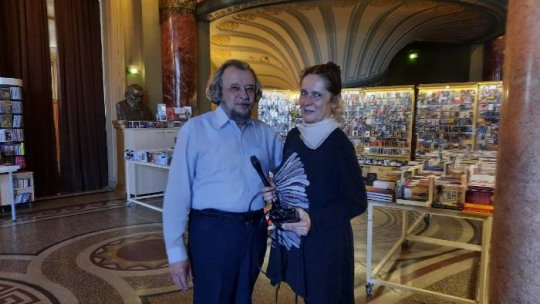
Prin noua haină muzicală pe care o îmbracă graţie inspiraţiei marelui compozitor Sabin Păutza avem din nou prilej să căutăm...

RadioDoc din 17 februarie 2022 - cu pianista Sînziana Mircea.
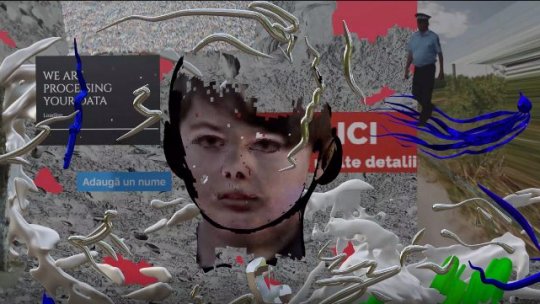
Metaverse-ul bate la ușă și, de data aceasta, nu ca spațiu versatil dintr-un roman cyberpunk.
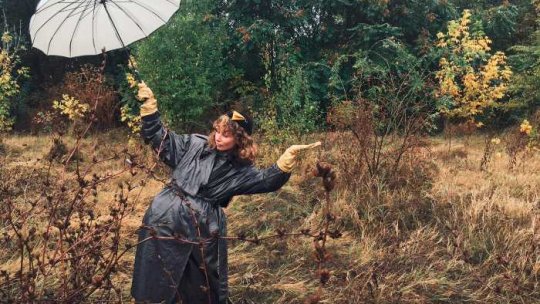
Aflăm povestea întâlnirii cu natura, în toamna 2021, împreună cu Andreea David , Raluca Oancea Nestor și toți ce li s-au...

Istoria, eroii acestui pământ, arhivele , momumentele, memoria, cărțile , recunoașterea, premiile, ștafeta transmisă unei noi...

Din perspectivă culturală, secolul al XVIII-lea este pentru Transilvania secolul conectării la pulsul occidental, un secol al...